
“I’ll tell you what’s helped me my entire life: I look at baseball as a game. It’s something where people can go out, enjoy and have fun. Nothing more.”
Happy 102nd to the one and only, Harry Caray!
“I’ll tell you what’s helped me my entire life: I look at baseball as a game. It’s something where people can go out, enjoy and have fun. Nothing more.”
Happy 102nd to the one and only, Harry Caray!
It was a confusing sequence of events on Thursday, Febuart 25th, 2016.
Kicking it off was the announcement of outfielder Chris Coghlan being traded to Oakland for RHP Aaron Brooks, a seemingly odd move given Coghlan’s value and Brooks’ small career sample size of just 15 games, with unimpressive numbers. This was a head scratcher. Why would the Cubs ship out a key depth guy for an unproven arm they don’t really need? An astute coworker of mine raised an eyebrow at the situation, claiming there had to be more to this deal.
There was. Ten minutes later, it was announced that Dexter Fowler was back.
Now this was a heretofore unfathomable situation that has unfolded. Many Cubs fans, writers and insiders, myself included, had speculated that Jorge Soler could be traded, likely to Cleveland or Tampa Bay, and that maybe Fowler would come back since he had yet to sign elsewhere after rejecting the initial qualifying offer back in November. An entire offseason later and Soler was still a Cub, plus Fowler finally had a multi-year deal on the table in Baltimore. No scenario was possible to have both Fowler and Soler on the same roster again, especially after picking up Jason Heyward, right? Wrong. With Coghlan moved to Oakland, and the Fowler deal with the Orioles incomplete, Theo Epstein, the puzzlemaster extraordinaire that he is, inked Fowler and opened up a world of possibilities for manager Joe Maddon.
Such possibilities include the ability to have Fowler, valuable as a switch-hitting leadoff man with power, start in CF, thus moving Jason Heyward to right, his natural position. Soler, in turn, can platoon in LF with Kyle Schwarber. The genius of that move, is that none of the big bats are sacrificed in the lineup, and there will always be one or more power guys to come off the bench. This also takes some defensive pressure off of Schwarber, and gives Maddon a myriad of lineup options against either left or right-handed opposing starting pitchers. In short, it’s a perfect scenario. On paper, anyway.
As we get the 2016 season underway, this is the most versatile, deep, talented, and potent roster the Cubs have had in many, many years. With division foes St. Louis and Pittsburgh to contend with, a bloodbath in the NL Central will surely ensue. But one thing is for sure: There can be no more excuses for the Cubs. Epstein and Jed Hoyer’s vision is right now.
“It’s always a hot time in Brooklyn when the Giants come over.”
– Red Barber
By now you’ve likely noticed that I’ve theorized more than once how baseball is a spooky game and has a very haunted history. One of the aspects of this theory that literally manifests itself, is in the sounds of the game. It has been said that the soundtrack to America, is baseball on the radio. Taking a cue from this, I did some poking around and, thanks to YouTube, many old radio broadcasts are available to listen to, including old baseball games. Such records are a window into the treasured past.
One of my favorite examples of this wonderful audible history, is a classic National League rivalry matchup between the Giants and Dodgers, when they were both still in New York, on April 22, 1950. The very first thing you hear is Ebbets Field PA announcer Tex Rickards’ booming voice announcing the batting orders before legendary radio broadcaster Red Barber takes over. The ensuing broadcast is a great snapshot of our pastime, and a wonderful, if not haunting example of the deep, rich history of the game in an important, meaningful moment.
Take a trip back to 1950, and a time when baseball was life in America.
“There are only two seasons: Winter and baseball.”
-Bill Veeck
Embark with me on a quick journey to paradise…
Imagine winter’s steely cold veil being rolled back to reveal clear skies of the prettiest electric blue on a warm spring afternoon, with perfectly manicured grass toting gorgeus shades of emerald and shamrock, while the strong and indisputable scents of popcorn, hot dogs, fresh roasted peanuts and ice cold beer tantalize your senses. Classic, peppy organ music and a sometimes overly excited announcer boom from seemingly out of nowhere to direct and dictate the action you’re witnessing. You sit back and become enveloped in a tranquil, yet excited relaxation as you cheer on your heroes in the most graceful chess match ever played, and it becomes infinitely clear why it’s called our national pastime.
That paradise is real.
And in just a few short days, we will see it.
The 2016 baseball season is about to begin.
“In baseball, you can’t kill the clock. You’ve got to give the other man his chance. That’s why this is the greatest game.”
Earl Weaver
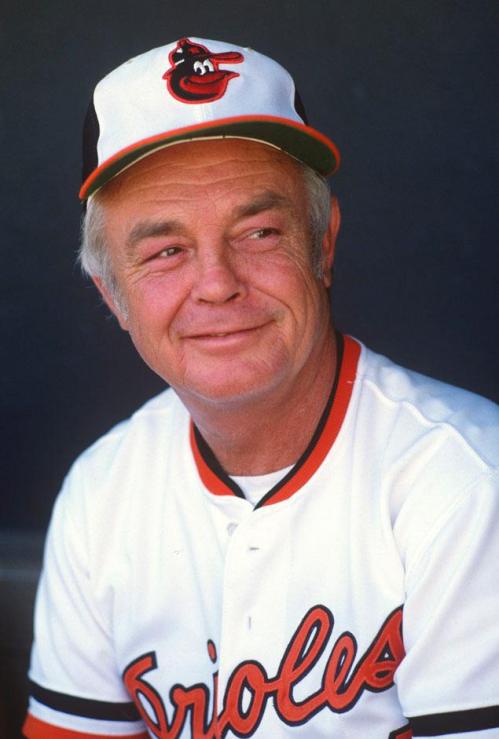
All good things come to an end. Except in this case…
One good (or bad, depending on your preference) thing will be ending soon. As the offseason winds down, so does the once-enormous number of quality free agents available, as well as some long-rumored trade deals that are on the hook for the Cubs.
It’s been a weakly kept secret that the Cubs are looking for another arm in the rotation, while several teams are interested in one of the Cubs’ hot young bats. Many have been the times where IF Javy Baez and/or OF Jorge Soler have been mentioned in potential deals with teams, notably Cleveland and Tampa Bay, both of whom are in love with the young player(s). Among those free agents still available, is CF Dexter Fowler. There is one scenario where resigning Fowler, who initially rejected the Cubs’ qualifying offer in November, would make perfect sense.
Cleveland has been highly interested in Soler for some time, and a deal involving P Carlos Carrasco would be a nice fit. Should the Cubs trade Jorge Soler, the very next move would ideally be to sign Fowler, or vice versa. It’s a simple matter of connecting the dots. With Soler out of RF, the Cubs can move newly acquired Jason Heyward over to right, his natural position, and have Fowler patrol center. In addition, this would effectively load the Cubs lineup (even more than it already is), for with Fowler you have a table setter who scores runs and also has some added power.
Other potential suitors for Soler include Tampa Bay, who have been in pretty regular talks of late, for a deal for P Jake Odorizzi. Should the Cubs not want to move Soler or Baez, there are plenty of big prospect bats available that would be attractive for any number of teams.
In all, these are good problems to have. I for one, believe the Soler-Heyward-Fowler carousel, as long as they’re adding a strong SP in the process, would be the best scenario for the Cubs.
But then, how often do we get to have our cake and eat it too?
I’ve long maintained that Field of Dreams is not a baseball movie.
It’s really not. It is at it’s core, a story about an Iowa farmer named Ray Kinsella who is long racked by guilt wishing to reconcile his relationship with his deceased father, John, by way of their one mutual love, baseball, as the backdrop. The wonderful novel from which the film is based – Shoeless Joe by W.P. Kinsella, tells a noticeably richer story and like most book to film adaptations, the written version is different than the visual. The changes from book to film, due largely for pacing & budget’s sake, spin a wider and thicker web with many signficant differences. At the risk of sounding overly theoretical and metaphysical, let’s examine the main changes between the novel and film. Which is better – the book or the movie, you ask? Well, that’s entirely up to you. However, if you have not read the book, stop reading now if you wish to avoid spoilers…

Several important characters were in the book but not the film. Most crucially:
Eddie Scissons: An oldtimer who originally owned Ray’s farm. He also claims some fame as the oldest living Chicago Cub (or is he?)
Richard Kinsella: Ray’s identical twin brother. He has a girlfriend named Gypsy and whether by design or by intent, he cannot see the field or the players…
Abner Bluestein: Real estate business partner of Ray’s skeptical brother-in-law Mark.
JD Salinger: The book’s version of Terrence Mann. In real life Salinger threatened to sue if his personage was used in the film, so the fictional character of Mann, brilliantly played by James Earl Jones, was created.
Other important book to film differences:
Thus, while not surprising that the novel lays out more detail and enriches the storyline, there is no real wrong answer as to which is better. Both are excellent. Yet the novel, in several ways, delves a bit deeper into the actual baseball angle, with several subtle references and offering tidbits of folklore about the game. While many of these are not present in the film, studying the book gives one that “oh! NOW that makes sense!” feeling when watching the movie.
My advice: Enjoy both the book and film for the full experience of this magical story.
…and go have a catch with someone.

My usual jogging route through my neighborhood takes me right up to St. Joe’s Park, the place where I, and my older brothers before me, played little league from ages 7 to 14. Today however, I decided to jog a bit further and actually go into the park itself, the first time I’ve looked at it up close in over 20 years.
Whoosh! The feeling of nostalgia and influx of memories was stronger than I anticipated. Being completely alone on a gray morning in a place where I spent so much of my youth was equally enjoyable and forlorn. Leaning up against the fence and staring out over the field where I logged countless innings that felt like ages ago, and yet not so much. If I imagined hard enough, I could actually see myself out there as a kid, hear the echoes of the old P.A. system, see the lights at old Coaches Corner, and hear the annoying, endless buzzing of the air conditioner at the concession stand. Though the park and league are still in operation (going into it’s 76th year), it’s a ghost of it’s own past – my past. This of course, was the park where:
I often wish I would’ve viewed the game then the same way I do now…I may have played well after High School. I could go on forever blabbing this anecdotal material and perhaps I will expound upon some in a later post(s), but the essence of what I felt this morning was about the connection to the past and the fond retrospection of youth that baseball, specifically the ballpark itself, can provide. Like no other sport’s field, rink, or court of play, an old ballpark has a hauntingly charming atmosphere that should be revered. I was reminded of this today in full force.
It doesn’t have to have an altar and stained glass windows to be considered a church.
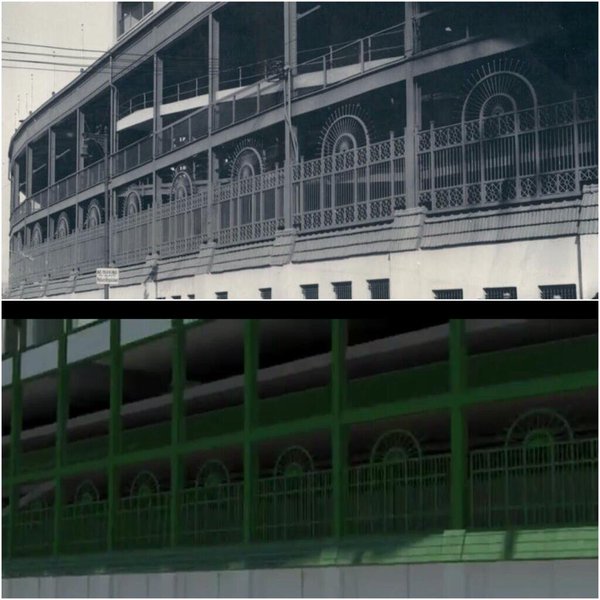
Apparently, one of the features of the Wrigley Field renovations for 2016 will be re-installing the wrought iron fence facade, as it appeared in the 1930’s.
This Cubs fan thinks that’s rather awesome.
Greetings, all!
Welcome to radbournsrevenant, a new blog about all things baseball. Herein will be articles, stories, lists, anecdotes, and general blurbs about our great American pastime.
Bear with me as I get things rolling here, likely starting with a couple recycled posts from my other blog, http://www.socialspecter.com.
Thanks for reading!
Kevin
 Radbourn's Revenant