
“Spring Training means flowers, people coming outdoors, sunshine, optimism and baseball. Spring Training is a time to think about being young again.”
Ernie Banks

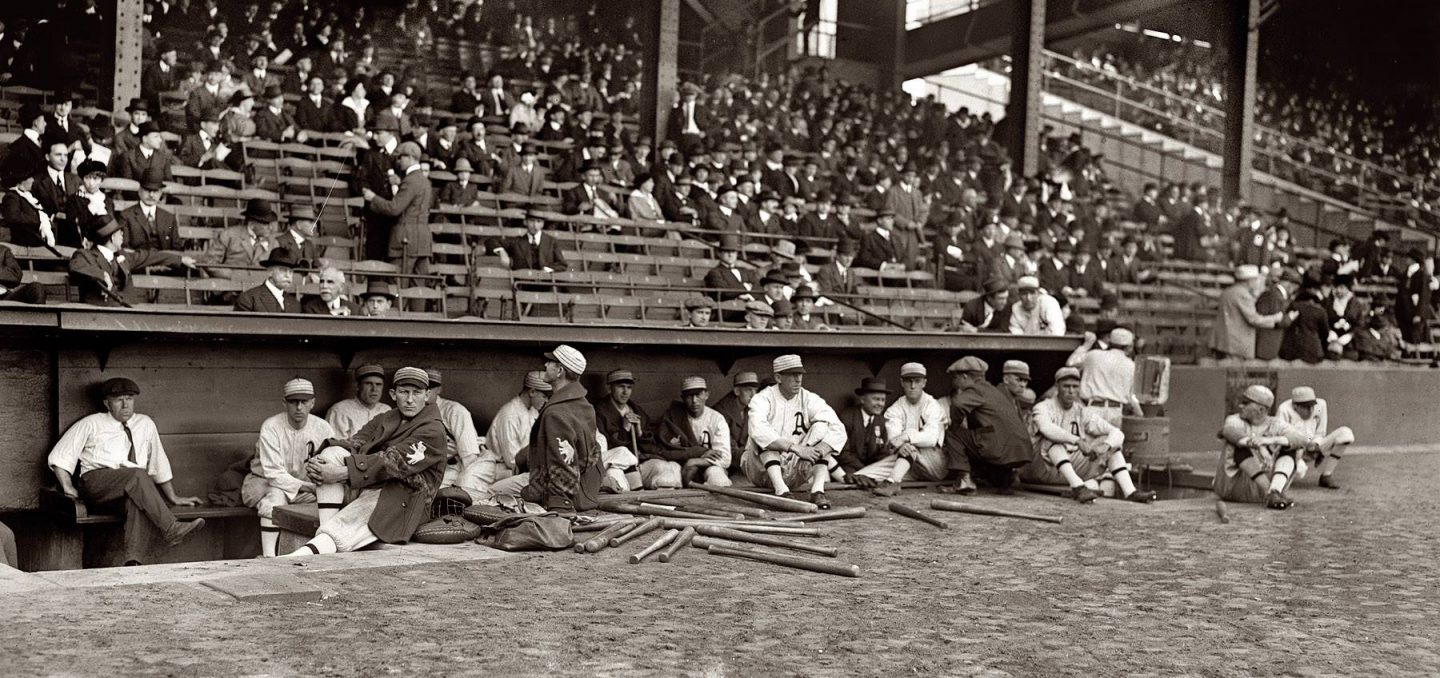
“Spring Training means flowers, people coming outdoors, sunshine, optimism and baseball. Spring Training is a time to think about being young again.”
Ernie Banks
“I’ll tell you what’s helped me my entire life: I look at baseball as a game. It’s something where people can go out, enjoy and have fun. Nothing more.”
Happy 102nd to the one and only, Harry Caray!
“It’s always a hot time in Brooklyn when the Giants come over.”
– Red Barber
By now you’ve likely noticed that I’ve theorized more than once how baseball is a spooky game and has a very haunted history. One of the aspects of this theory that literally manifests itself, is in the sounds of the game. It has been said that the soundtrack to America, is baseball on the radio. Taking a cue from this, I did some poking around and, thanks to YouTube, many old radio broadcasts are available to listen to, including old baseball games. Such records are a window into the treasured past.
One of my favorite examples of this wonderful audible history, is a classic National League rivalry matchup between the Giants and Dodgers, when they were both still in New York, on April 22, 1950. The very first thing you hear is Ebbets Field PA announcer Tex Rickards’ booming voice announcing the batting orders before legendary radio broadcaster Red Barber takes over. The ensuing broadcast is a great snapshot of our pastime, and a wonderful, if not haunting example of the deep, rich history of the game in an important, meaningful moment.
Take a trip back to 1950, and a time when baseball was life in America.
“There are only two seasons: Winter and baseball.”
-Bill Veeck
Embark with me on a quick journey to paradise…
Imagine winter’s steely cold veil being rolled back to reveal clear skies of the prettiest electric blue on a warm spring afternoon, with perfectly manicured grass toting gorgeus shades of emerald and shamrock, while the strong and indisputable scents of popcorn, hot dogs, fresh roasted peanuts and ice cold beer tantalize your senses. Classic, peppy organ music and a sometimes overly excited announcer boom from seemingly out of nowhere to direct and dictate the action you’re witnessing. You sit back and become enveloped in a tranquil, yet excited relaxation as you cheer on your heroes in the most graceful chess match ever played, and it becomes infinitely clear why it’s called our national pastime.
That paradise is real.
And in just a few short days, we will see it.
The 2016 baseball season is about to begin.
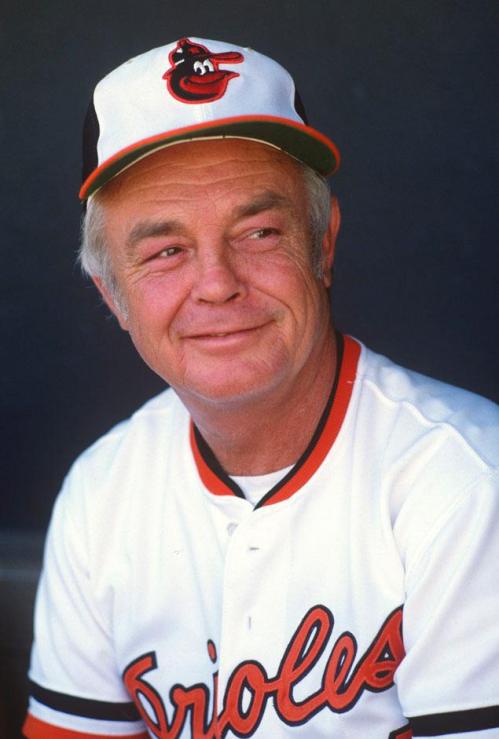
“In baseball, you can’t kill the clock. You’ve got to give the other man his chance. That’s why this is the greatest game.”
Earl Weaver
Rad was more than a tremendous pitcher. He was a pioneer. Here is a quick tip of the cap to, and acceptance of, the bird flipped our way by the legendary gent who’s namesake was the inspiration for this blog. Here is the man in all his glory, Old Hoss Radbourn in a Boston team photo on Opening Day, 1886, giving the finger to the cameraman. This is the first known photo to showcase the gesture. Way to go ‘Ol Hoss!

I’ve long maintained that Field of Dreams is not a baseball movie.
It’s really not. It is at it’s core, a story about an Iowa farmer named Ray Kinsella who is long racked by guilt wishing to reconcile his relationship with his deceased father, John, by way of their one mutual love, baseball, as the backdrop. The wonderful novel from which the film is based – Shoeless Joe by W.P. Kinsella, tells a noticeably richer story and like most book to film adaptations, the written version is different than the visual. The changes from book to film, due largely for pacing & budget’s sake, spin a wider and thicker web with many signficant differences. At the risk of sounding overly theoretical and metaphysical, let’s examine the main changes between the novel and film. Which is better – the book or the movie, you ask? Well, that’s entirely up to you. However, if you have not read the book, stop reading now if you wish to avoid spoilers…

Several important characters were in the book but not the film. Most crucially:
Eddie Scissons: An oldtimer who originally owned Ray’s farm. He also claims some fame as the oldest living Chicago Cub (or is he?)
Richard Kinsella: Ray’s identical twin brother. He has a girlfriend named Gypsy and whether by design or by intent, he cannot see the field or the players…
Abner Bluestein: Real estate business partner of Ray’s skeptical brother-in-law Mark.
JD Salinger: The book’s version of Terrence Mann. In real life Salinger threatened to sue if his personage was used in the film, so the fictional character of Mann, brilliantly played by James Earl Jones, was created.
Other important book to film differences:
Thus, while not surprising that the novel lays out more detail and enriches the storyline, there is no real wrong answer as to which is better. Both are excellent. Yet the novel, in several ways, delves a bit deeper into the actual baseball angle, with several subtle references and offering tidbits of folklore about the game. While many of these are not present in the film, studying the book gives one that “oh! NOW that makes sense!” feeling when watching the movie.
My advice: Enjoy both the book and film for the full experience of this magical story.
…and go have a catch with someone.
Baseball isn’t just the weirdest of all games. It’s also the spookiest. When you examine past eras of the sport, the ghosts of those bygone days tell an often eerie tale. Ray Chapman, the sparkling Indians shortstop who was struck by a pitch in the head and killed on August 16th, 1920, has a special place in the haunted history of our pastime.
At the end of October, 1919, members of the Cleveland Indians gathered at the Hotel Winton for Chapman’s bachelor dinner. Throughout the evening, amid the laughter, speeches and well wishes, Chapman could be heard whistling a song over and over, much to the confusion of his teammates and close friends.
The next time the entire club was together for a non-baseball related function was for Chapman’s funeral, less than a year later. The diddy he was whistling that night, it was recalled, was named “Good Bye Boys, I’m Through.”
Coincidence? Surely. But a bizarre instance nonetheless.
“…call it fate, call it luck, call it karma…” says Bill Murray’s Peter Venkman in the 1984 classic, Ghostbusters.
On July 25th, 2015, myself and two fellow diehard Cubs fan friends made the drive from our suburban town of Joliet to Wrigley Field for the Cubs/Phillies game. We didn’t anticipate anything special that day, just a few friends attending a ballgame like we’d all done so many times before. Little did we know that we would witness history.
It was a steamy summer Saturday and we arrived, customarily, well ahead of the 3pm first pitch to visit a few local establishments and take in the electric gameday atmosphere of Wrigleyville. On the way into the ballpark, I casually said to my friend Bill “you know what? I’m gonna do something today I haven’t done since I was about 10 years old.”
“Keep score?” Bill asked, reading my mind.
“Keep score.” I replied.
“Me too, that’s a great idea actually” he says, and we both proceeded to buy scorecards before entering the friendly confines.
We then witnessed Phillies pitcher Cole Hamels hurl a no-hitter against our beloved Cubs, cruising to a 5-0 win. It was about the only time I remember being satisfied with a loss, what with seeing a rare piece of baseball history in person. Now of course, deciding to keep score at the last second had nothing to do with the gem Hamels would toss, but it sure makes for an interesting coincidence. Why we both decided to keep a scorecard on that particular day, not for countless games prior, and not since, is worthy of a head scratch or two.

Just another slice of the magic of baseball.

My usual jogging route through my neighborhood takes me right up to St. Joe’s Park, the place where I, and my older brothers before me, played little league from ages 7 to 14. Today however, I decided to jog a bit further and actually go into the park itself, the first time I’ve looked at it up close in over 20 years.
Whoosh! The feeling of nostalgia and influx of memories was stronger than I anticipated. Being completely alone on a gray morning in a place where I spent so much of my youth was equally enjoyable and forlorn. Leaning up against the fence and staring out over the field where I logged countless innings that felt like ages ago, and yet not so much. If I imagined hard enough, I could actually see myself out there as a kid, hear the echoes of the old P.A. system, see the lights at old Coaches Corner, and hear the annoying, endless buzzing of the air conditioner at the concession stand. Though the park and league are still in operation (going into it’s 76th year), it’s a ghost of it’s own past – my past. This of course, was the park where:
I often wish I would’ve viewed the game then the same way I do now…I may have played well after High School. I could go on forever blabbing this anecdotal material and perhaps I will expound upon some in a later post(s), but the essence of what I felt this morning was about the connection to the past and the fond retrospection of youth that baseball, specifically the ballpark itself, can provide. Like no other sport’s field, rink, or court of play, an old ballpark has a hauntingly charming atmosphere that should be revered. I was reminded of this today in full force.
It doesn’t have to have an altar and stained glass windows to be considered a church.

